
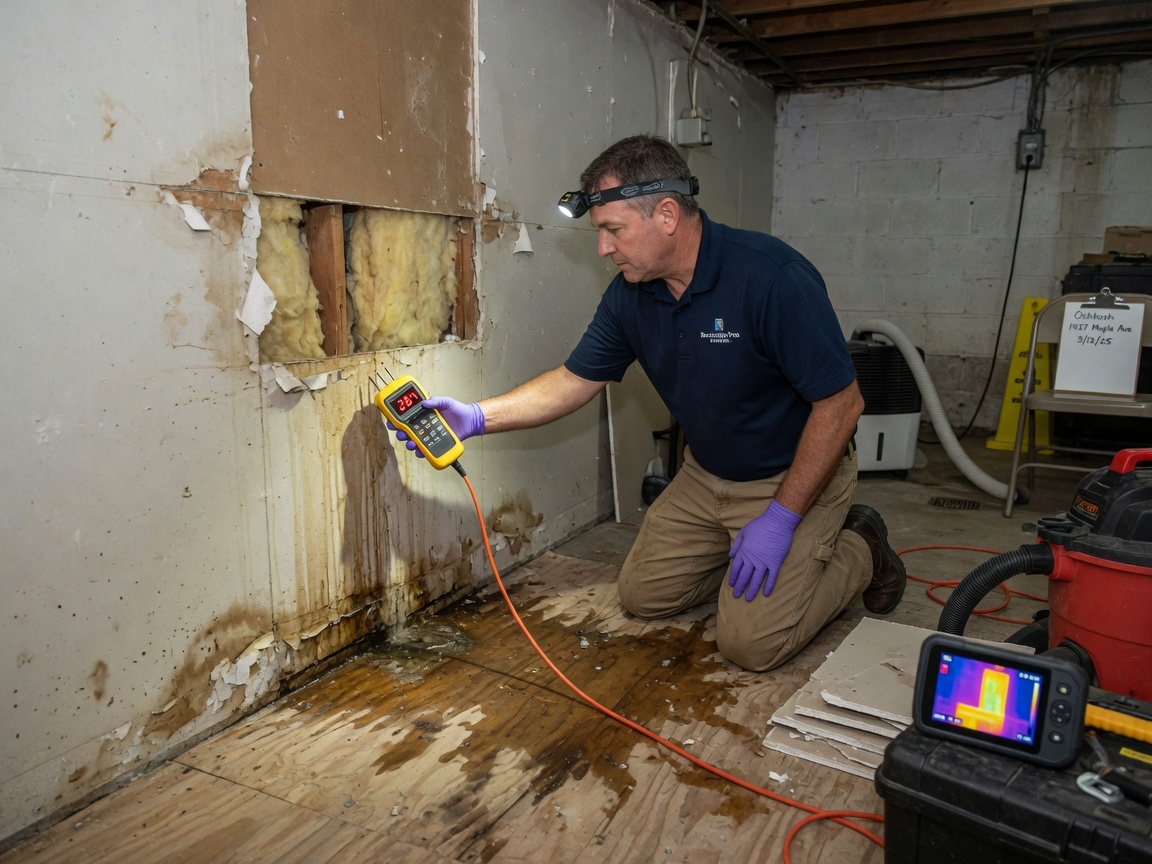
Oshkosh homes built before 1950 often feature lath-and-plaster walls and balloon framing that let water travel far from the leak source. Once winter temperatures drop and snow melts against foundations near the Fox River, moisture can wick upward into subfloors and wall cavities without visible signs on the surface. Extraction crews must pull baseboards and drill small test holes to reach these pockets before mold sets in on the cellulose insulation common in Winnebago County houses.
Infrared cameras and pinless moisture meters reveal temperature differences behind drywall in Northwest neighborhood basements where clay-heavy soils hold water against footings. After a roof leak near the Oshkosh Public Museum or a pipe failure in Downtown apartments, crews cut back wet drywall at least 18 inches past the damp line to prevent hidden saturation from reaching joists. Failure to do so frequently leads to cupping hardwood floors once humidity rises again in summer.
Green Bay and Fond du Lac storms can dump several inches of rain quickly, overwhelming older gutters on Oshkosh two-stories and driving water into soffits. Technicians then use air movers and dehumidifiers sized for the square footage while monitoring daily moisture readings to meet the 48-to-72-hour drying window before secondary damage occurs. Homeowners who skip professional extraction often see recurring stains on ceilings months later when the next freeze-thaw cycle hits.
Technician insight
In Oshkosh the thing that catches most people out with hidden moisture after a leak is how balloon-framed houses from the 1920s let water run the full height of the wall and pool behind the baseboard on the north side of the lot where snow piles up against the foundation.
Northwest Neighborhood Ceiling Leak
Water from an ice dam on a 1930s two-story reached the second-floor plaster and traveled down to the first-floor dining room. Meters showed elevated readings six feet past the visible stain. Crews opened the ceiling cavity, extracted trapped water, and ran drying equipment for four days until readings normalized.
Hidden Moisture After a Leak Services We Offer
✓Infrared Moisture Mapping
Pinpoints hidden water behind plaster and drywall in Winnebago County homes without unnecessary demolition.
✓Cavity Drying After Leak
Places air movers and dehumidifiers inside wall and floor voids to pull moisture from insulation and framing.
✓Baseboard and Trim Removal
Carefully removes trim to access wet subfloors in older Downtown and Northwest properties while preserving reusable pieces.
✓Post-Leak Mold Prevention
Applies antimicrobial treatments to exposed surfaces after extraction to reduce mold risk in humid continental conditions.
✓Subfloor Moisture Extraction
Drills weep holes and uses extraction wands to remove water trapped between joists common in pre-war Oshkosh housing.
Hidden Moisture After a Leak Cost in Oshkosh, WI
| Service | Typical Range | What Affects It |
|---|---|---|
| Initial Moisture Assessment | $125–$225 | Varies with home size and number of rooms checked. |
| Cavity Drying Package | $450–$900 | Depends on equipment runtime and access difficulty. |
| Subfloor Extraction Add-On | $200–$400 | Added when water reaches joist spaces in older homes. |
Ranges are typical for Oshkosh, WI and confirmed with an exact written quote before any work starts.
How it works
- 1
On-Site Assessment
Technician arrives from the 2601 S Washburn St base and uses meters plus infrared to locate moisture extent in the affected rooms.
- 2
Controlled Demolition
Removes only the minimum drywall or flooring needed to reach saturated materials while protecting unaffected areas.
- 3
Water Extraction
Deploys portable extractors and wands to pull standing and trapped water from cavities and subfloors.
- 4
Drying and Monitoring
Sets equipment and returns daily to check readings until moisture levels return to normal for the structure.
Pricing
Pricing based on square footage affected and number of cavities opened; inspection quoted upfront.