
2026-09-18 · Dave Larson
How Hidden Water Travels Under Floors and Behind Walls
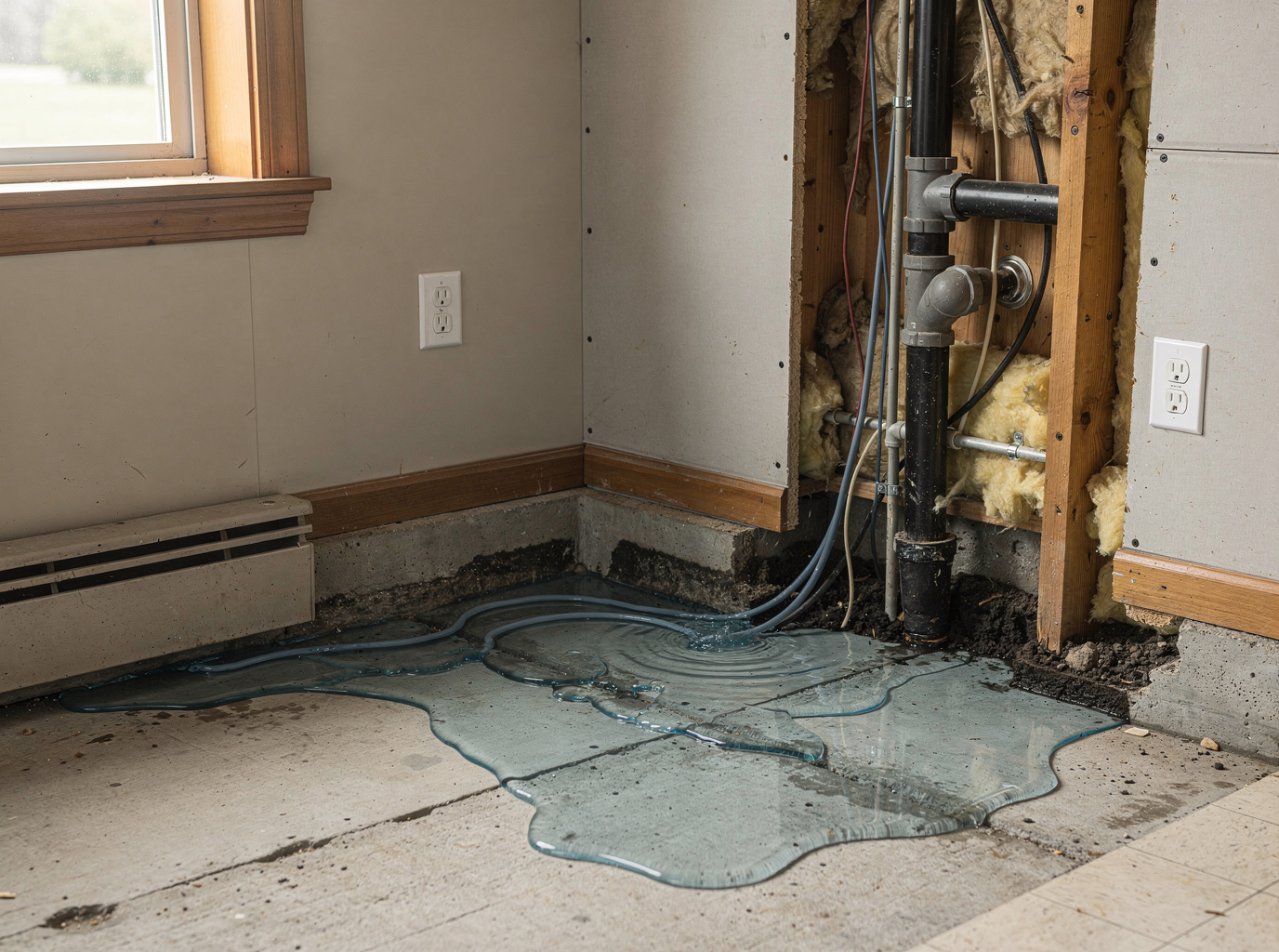
Hidden water travels under floors through gaps in subflooring and behind walls via stud cavities, moving 8 to 15 feet from the leak point due to capillary action and gravity in typical Oshkosh construction. This movement accelerates in older Downtown and Northwest neighborhoods where wood framing allows moisture to wick along joists and drywall seams without visible signs on the surface.
Capillary Action Under Floors
Capillary action pulls moisture upward through porous materials like plywood subfloors and carpet padding when water sits undetected. In Winnebago County homes built before 1970, this wicking effect often carries water 4 to 6 inches above the slab level, saturating insulation and promoting mold within 48 hours during warm summer humidity. The process speeds up near the University of Wisconsin-Oshkosh campus where older rental properties have settled foundations that create slight slopes directing water toward interior walls. Homeowners notice musty odors first in closets or along baseboards before any discoloration appears. Checking for soft spots with a moisture meter reveals the true spread before it reaches living areas. See our guide on water under flooring for inspection steps tailored to local housing stock.
Gravity and Wall Cavity Movement
Gravity pulls water downward through wall cavities once it enters from above, following the path of least resistance along electrical wires and plumbing runs. In Oshkosh's two-story homes near the Oshkosh Public Museum, this often deposits moisture at the bottom plate where it pools and soaks into adjacent flooring. Pressure differences from indoor heating in winter push vapor further into insulation, creating hidden damp zones that extend 10 feet laterally. The humid continental climate with its rapid temperature swings worsens the issue when warm air meets cold exterior walls. Residents in Fond du Lac or Green Bay report similar patterns after roof leaks or appliance failures. Testing baseboards with infrared cameras shows temperature drops indicating trapped water long before drywall softens.
Winter Pipe Bursts and Seasonal Spread
Cold snowy winters in Winnebago County cause pipes to freeze and burst inside walls, sending water along the path of least resistance toward floors. These events commonly affect homes in River East and Sawyer Creek where older plumbing runs through uninsulated exterior walls. Water then travels behind drywall for days until it reaches the lowest point, often saturating carpet in basements 12 to 20 feet away. The subsequent thaw in spring accelerates flow through any existing gaps. See our article on frozen pipe water damage for local response timing. Checking water behind walls early prevents structural rot in these frame structures.
Practical Detection in Oshkosh Homes
Start by monitoring humidity levels above 55 percent in finished basements during the first warm spell after snowmelt. Use a moisture meter on baseboards in Northwest Oshkosh properties to map hidden travel paths before they reach the Oshkosh Public Museum area homes. Document any soft flooring near the University of Wisconsin-Oshkosh student housing where high occupancy increases leak risks from shared plumbing. See our guide on what to do when water is spreading for step-by-step local checks that match the area's terrain and housing age.